

Introduction
Scientific discovery rarely follows a straight path. A single research question can lead through multiple disciplines, requiring researchers to move between structural biology, molecular modeling, computational chemistry, machine learning, and experimental design. Each stage generates new information, new hypotheses, and new decisions that influence the direction of the project. Yet despite the increasingly interdisciplinary nature of modern life science research, computational workflows often remain fragmented. Structural prediction tools, molecular simulation engines, docking platforms, generative models, and biological databases are frequently isolated from one another, creating unnecessary barriers between scientific questions and scientific answers. LiteFold was developed to bridge these gaps. The platform brings together advanced artificial intelligence, molecular modeling, structural biology, and scientific automation into a single research environment. By integrating these capabilities into a connected workflow, LiteFold enables researchers to move from biological questions to computational experiments and from computational results to actionable insights without switching between multiple software ecosystems.Research Workflow
Drug discovery and protein engineering are inherently iterative processes. New hypotheses emerge from data, predictions lead to experiments, and experimental observations generate new questions. LiteFold is designed around this scientific cycle. Rather than treating structure prediction, docking, simulation, and molecular design as independent tasks, the platform connects them into a continuous workflow where information generated in one stage becomes the foundation for the next. A typical research workflow may begin with sequence analysis and structure prediction, proceed through binding-site characterization and molecular interaction studies, advance into protein or small-molecule design, and conclude with simulation-based validation and optimization. At every stage, researchers remain within the same environment, preserving context, reproducibility, and scientific continuity.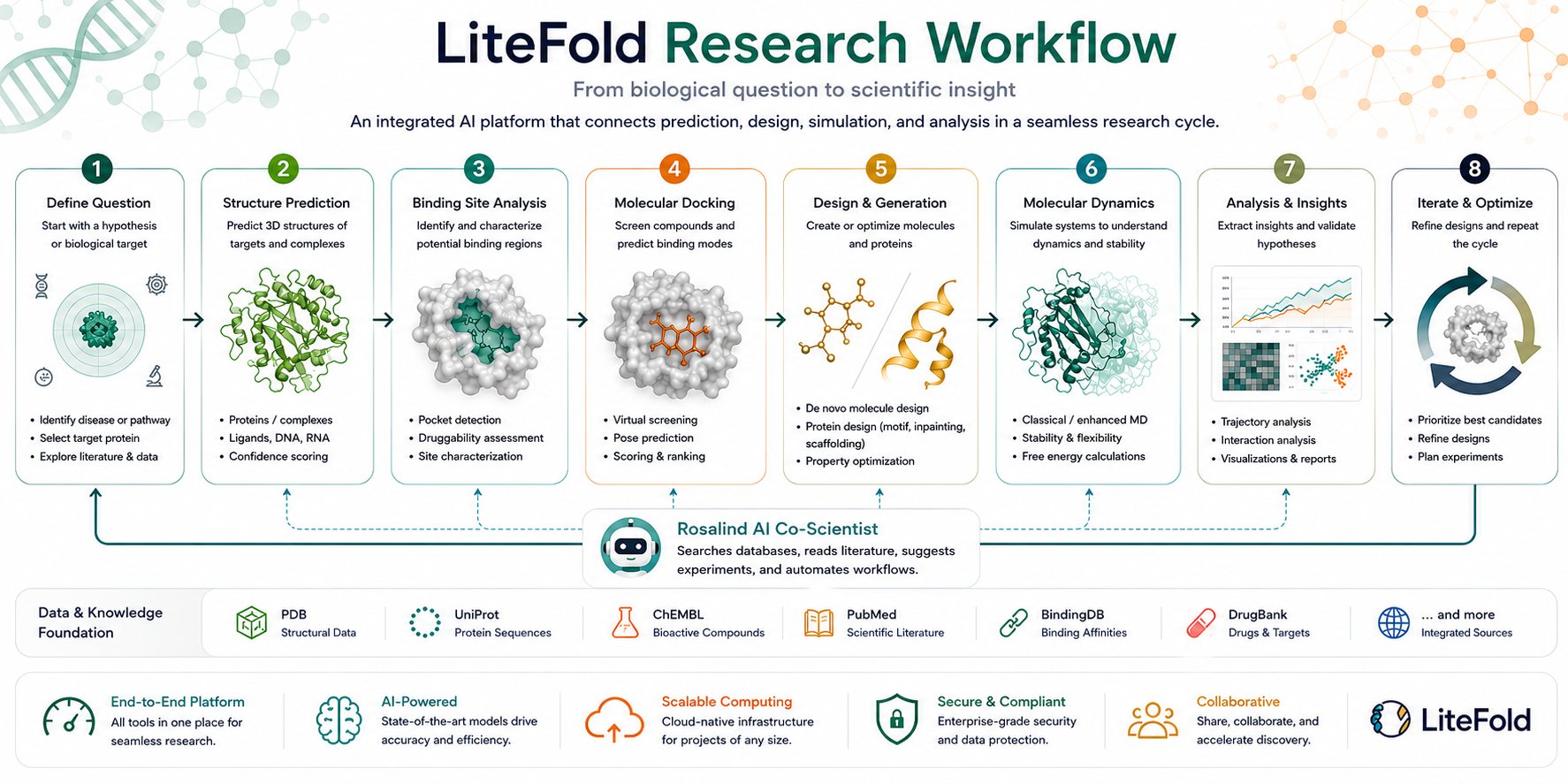
From Biological Questions to Computational Answers
Many research projects begin with a deceptively simple question. How does a mutation alter protein function? Why does one molecule bind while another does not? Can an existing protein be redesigned to perform a new function? What structural features drive selectivity or resistance? Answering these questions requires the integration of multiple computational approaches. Structural information must be generated or obtained. Interactions must be analyzed. Hypotheses must be tested through modeling and simulation. Candidate molecules or proteins must be designed, refined, and validated. LiteFold provides the computational framework needed to connect these investigations into a coherent scientific workflow. By integrating prediction, analysis, design, and validation within a single platform, researchers can focus on biological interpretation rather than software management.Structure as the Foundation
Structure provides the framework through which biological function is understood. The arrangement of atoms within a protein determines how it folds, interacts with binding partners, recognizes ligands, and performs its biological role. As a result, structural information often serves as the starting point for modern computational discovery programs. LiteFold’s Structure Prediction capabilities enable researchers to generate high-confidence three-dimensional models directly from sequence information. These models become the basis for downstream analyses, including docking studies, binder design, mutation assessment, and molecular dynamics simulations. By making structure prediction a native component of the platform, LiteFold allows researchers to transition immediately from sequence-level information to structure-driven decision making.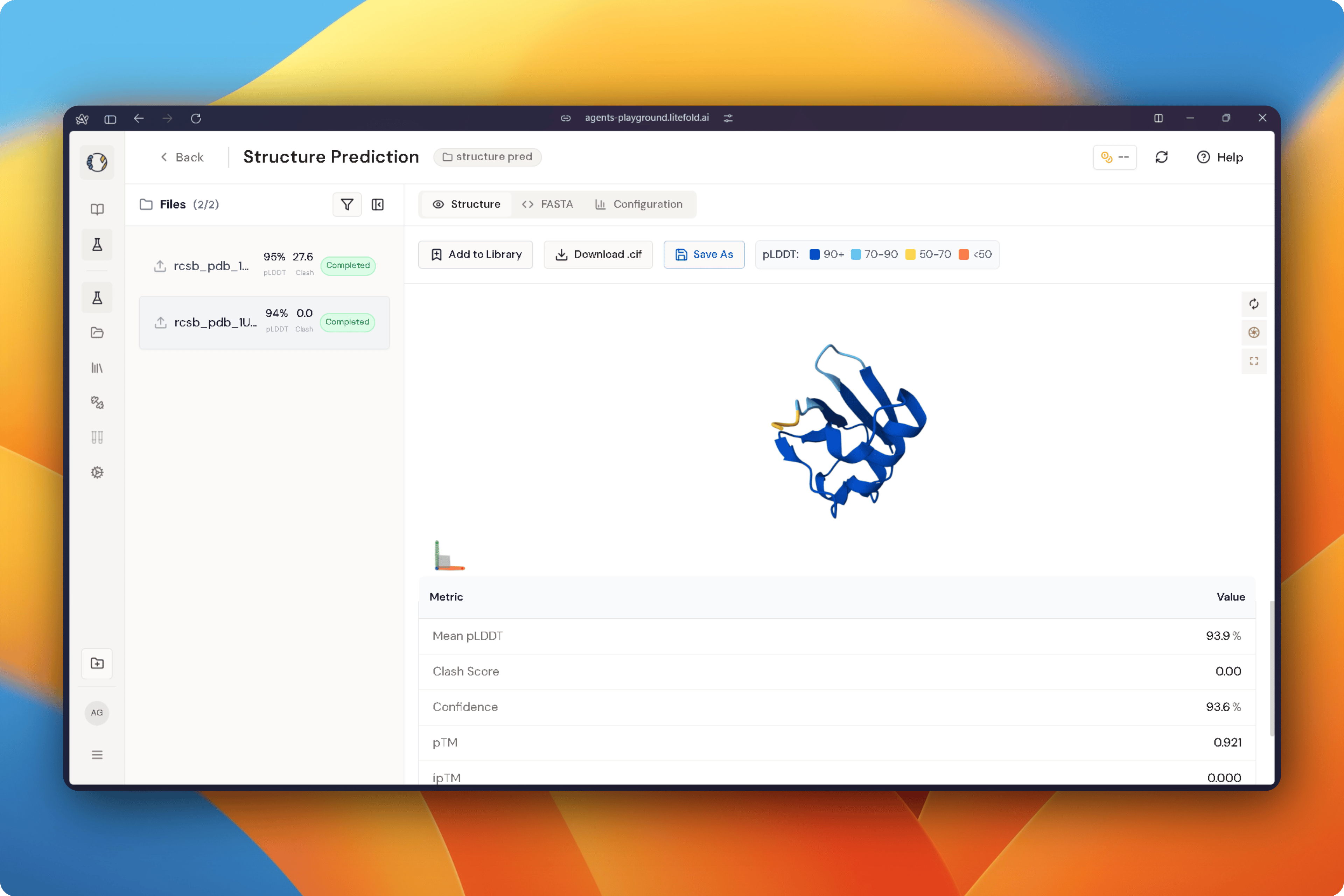
Understanding Molecular Interactions
Biological activity ultimately emerges from molecular interactions. Proteins recognize ligands through highly specific patterns of electrostatic attraction, hydrogen bonding, hydrophobic contacts, and structural complementarity. Understanding these interactions is essential for drug discovery, protein engineering, and mechanistic biology. LiteFold’s Molecular Docking environment enables researchers to investigate these interactions at atomic resolution. Binding sites can be identified, candidate compounds can be evaluated, and interaction networks can be visualized directly within the platform. Rather than simply producing docking scores, the platform provides structural context that helps researchers understand why interactions occur and how they may be improved through further design.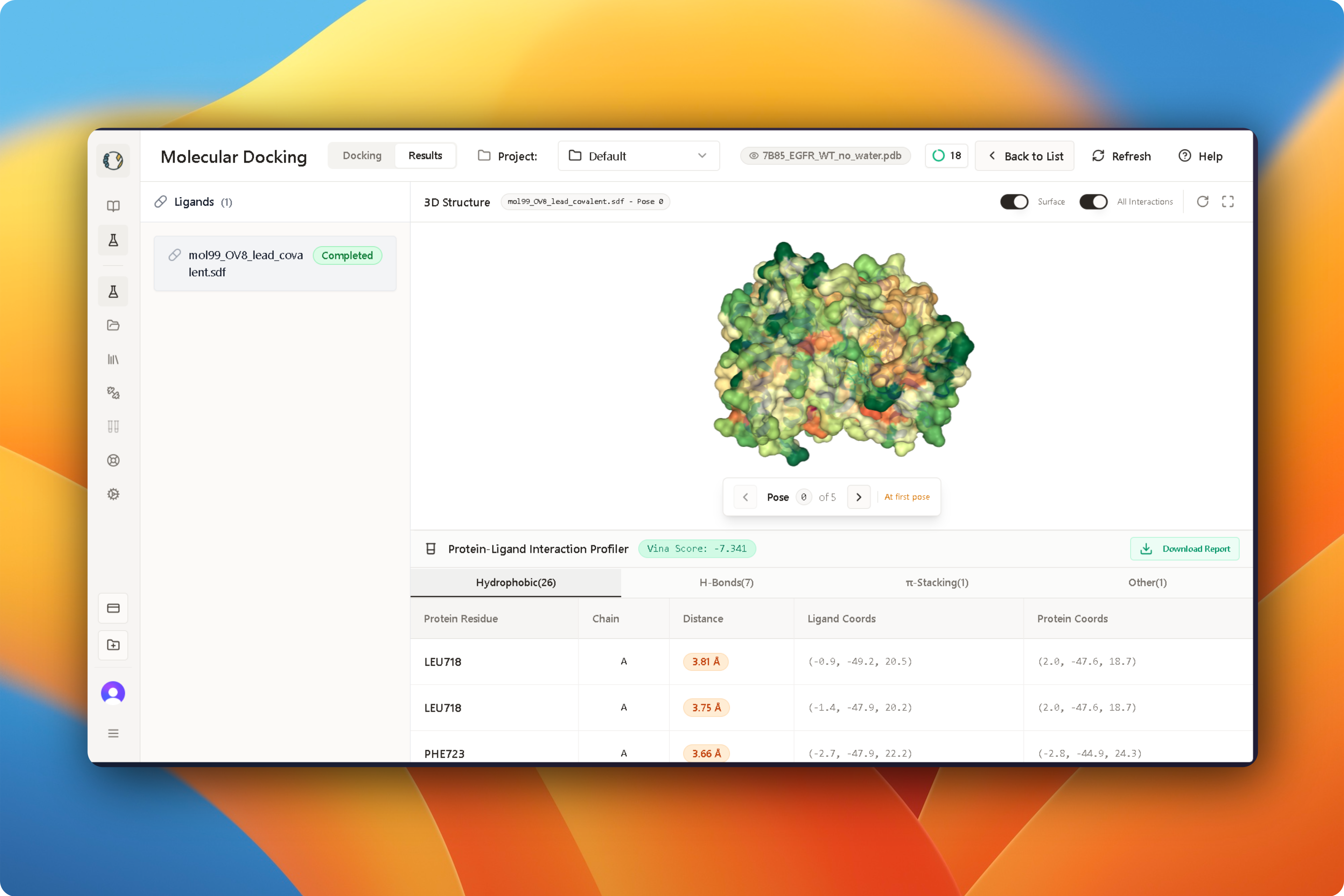
Designing What Does Not Yet Exist
Scientific progress often requires moving beyond analysis and into creation. Whether generating new therapeutic proteins, engineering molecular binders, redesigning biological interfaces, or creating novel small molecules, modern discovery increasingly depends on the ability to design systems that do not currently exist in nature. LiteFold’s Design and De Novo modules provide researchers with AI-driven tools for molecular generation and optimization. Existing proteins can be redesigned through motif preservation, scaffold engineering, and localized sequence modification, while entirely new molecules can be generated directly from structural information. These capabilities transform computational biology from a purely analytical discipline into a creative engineering process, allowing researchers to explore new regions of biological and chemical space.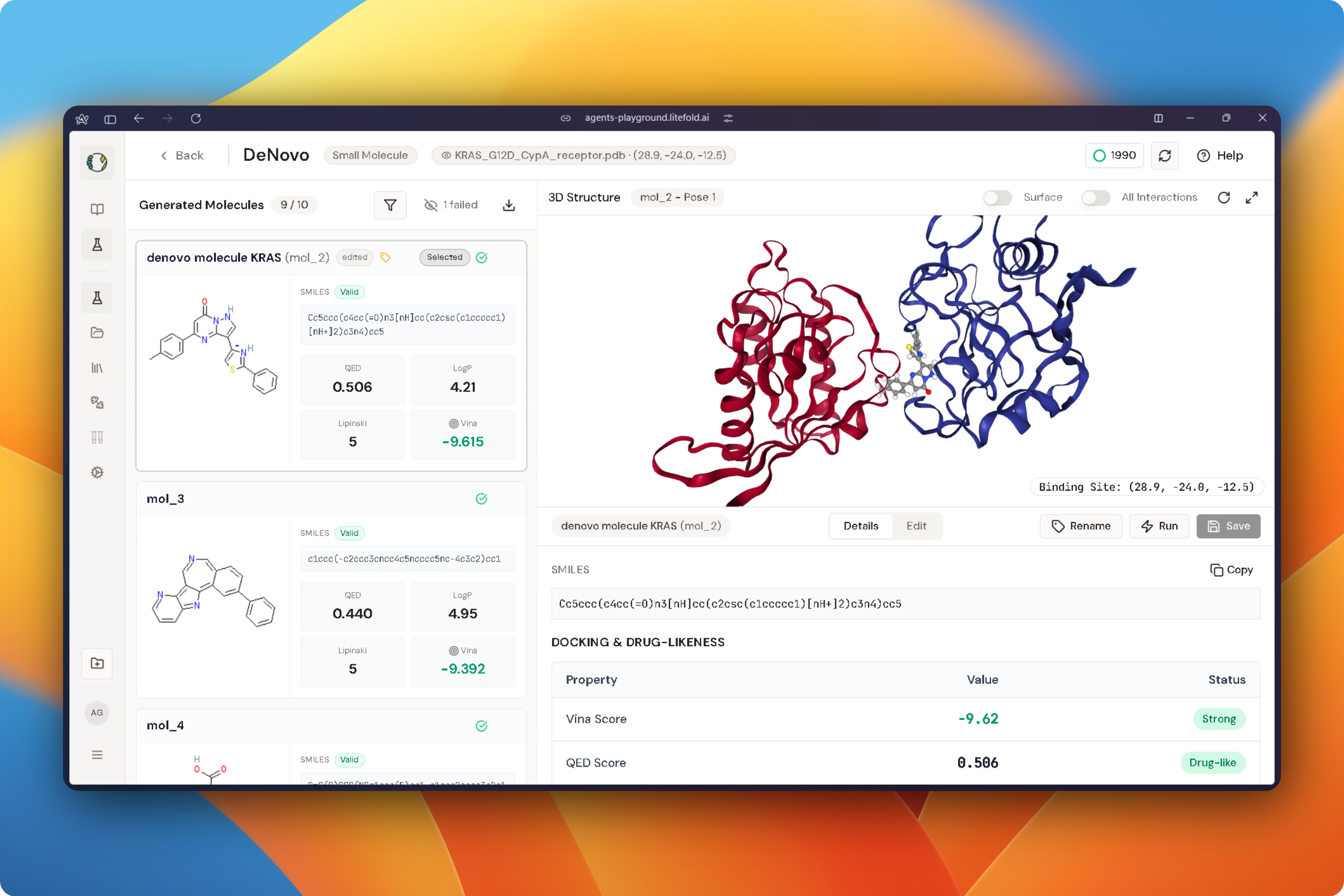
Dynamics Beyond Static Structures
A protein structure represents only a single snapshot within a continuously changing molecular system. Proteins fluctuate, interactions form and break, and biological function often emerges from movement rather than static architecture. Understanding these dynamic behaviors is critical for interpreting molecular mechanisms and evaluating therapeutic candidates. Dynamo, LiteFold’s molecular dynamics environment, enables researchers to investigate structural motion across time. Through trajectory analysis, stability assessment, hydrogen-bond monitoring, and conformational exploration, researchers can study how molecular systems behave under realistic conditions. These simulations provide a deeper understanding of biological systems and help validate predictions generated during earlier stages of the workflow.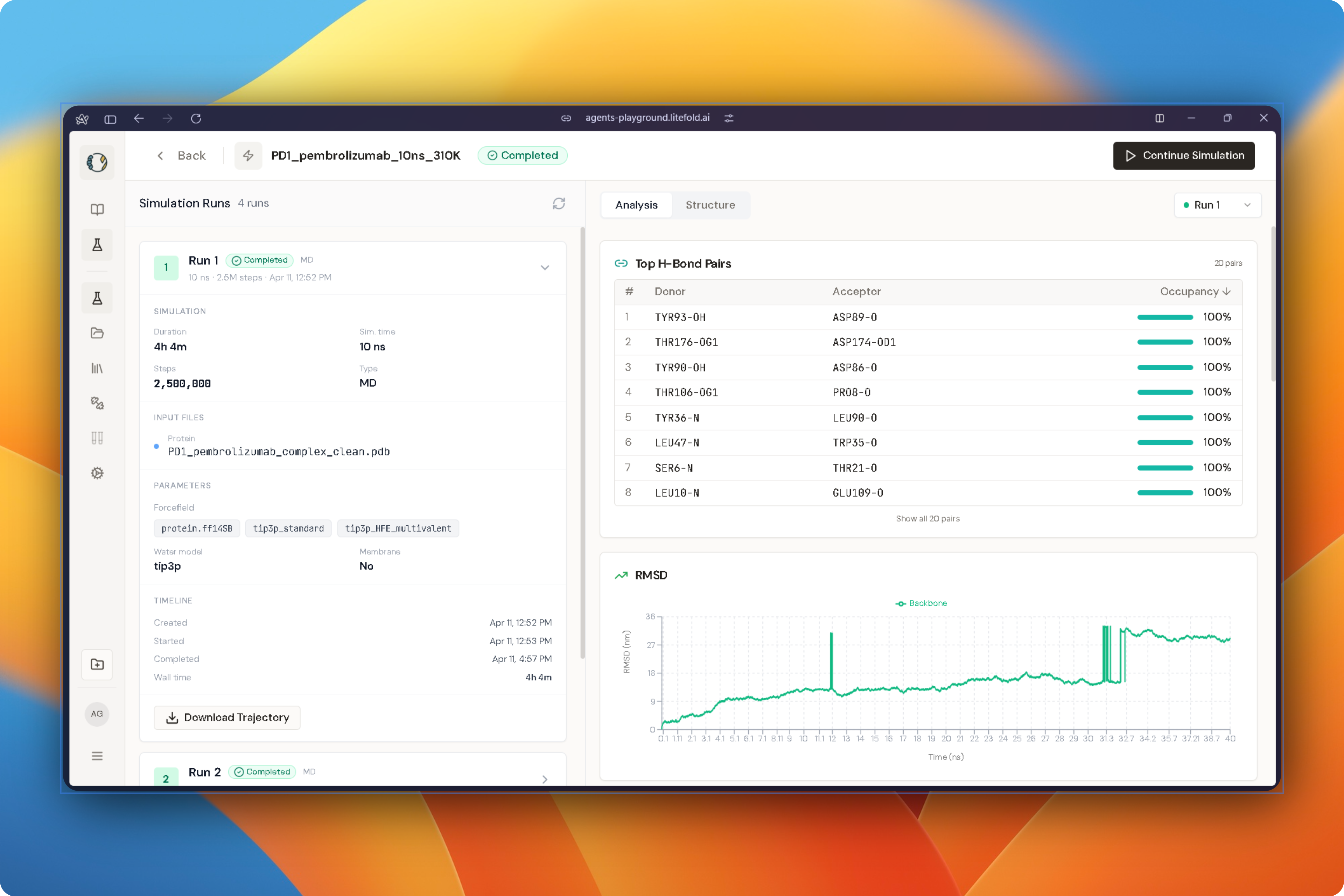
Next Steps
Quickstart Guide
Run your first experiment in minutes
Drug Discovery Workflow
Learn end-to-end drug discovery workflows
API Documentation
Integrate LiteFold into your existing pipelines
Community Forum
Connect with other researchers